Super Massive Black Holes: The Cycle of the Universe

It's hard to say how long it would have taken for me to get onto this topic, but recently there has been a lot of talk circulating the internet about the James Webb Telescope having discovered that our galaxy is stuck within the centre of a black hole, which always leads scientists and physicists to create plausible but also implausible theories as if with subconscious intention to complicate things far beyond comprehension, when in fact, sometimes things are a lot more simplified than we think.

So, let's dive into this topic.
Firstly, all galaxies are formed, as we know them, through use of a Super Massive Black Hole.
The proof, is in the shape of the galaxies inevitably appearing as a spiral when viewed from a distance or observed, in which a Super Massive Black Hole is introduced as its gravitational centre.
This is a requirement for a sustainable galaxy (I'll explain why in a bit).

This is a consistency in the Universe, with non-spiral galaxies still in the formation stages but with an inevitability to be pulled into the gravitational pull of a nearby Super Massive Black Hole to form, or to become a part of, an already circulating spiral galaxy that had been formed from a Super Massive Black Hole's gravitational pull.


This is an inherited fate of all matter, large or small, within our Universe, and is, eventually, unavoidable.

See that center light? That is the Super Massive Black Hole from a distance with the only viewable detail and defining trait being the collection of light at the center before being pulled into the "pocket" of the Super Massive Black Hole.

There is no set size (outside of Universal finality calculations), as a Super Massive Black Hole begins as nothing but a smaller Black Hole, but increases it's size naturally over time to become a Super Massive Black Hole, or through the introduction and collision of a second Black Hole to form a larger black hole.
This is why we see spiral galaxies of all sizes in the Universe rather than a single general size, as the bigger the Super Massive Black Hole, the larger the gravitational pull, and thus the larger or smaller size of a galaxy in comparison to other galaxies.
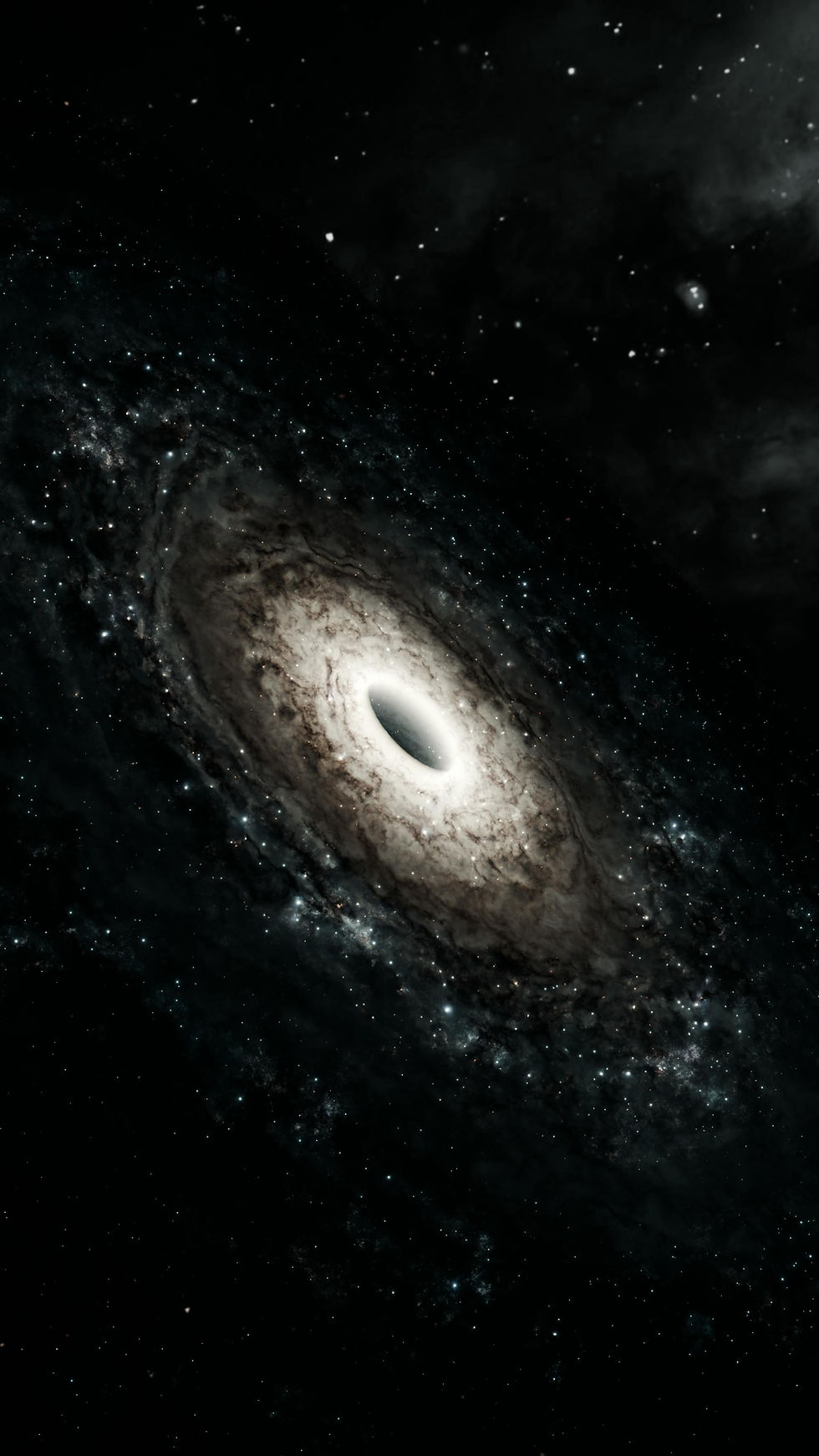
This is how the spiral shape of a galaxy is formed, through the introduction of a Super Massive Black Hole and it's collection of all objects within it's gravitational pull radius.

Note that this "theory" is specific only to the inner workings of the Universe, not specifically the outer workings of the Universe, which we covered in "The Universe: Perpetual Multi-Curvature Rotation," nor does it cover the purpose of the Universe alongside other created Universes (which we will cover another time).

And yes, I said "created,"
but we'll get to that someday.

Now this isn't presently room for panic as it will take billions upon billions of years or longer for it to ever even become a topic for concern, and by then, if still in existence, Humans will be an interplanetary species stretching across the Universe, so although unavoidable, we'll have a fighting chance of survival for quite some time at the very least, even by said "point of concern."

But then of course, by then, their are celestial body and star collisions from galaxy collisions brought on by the BEAO Black Hole, but we'll get to that in a bit here. 😉

The good new is, without Super Massive Black Holes, the Universe would be thrown out of wack from the get-go, so they're quite literally a requirement.
See, Super Massive Black Holes actually create a perfect equation in which everything works as intended within it's gravitational pull.
All of which is impossible without a Super Massive Black Hole at the galaxies core.

Now I should mention that their are in fact different types of galaxies in which not all galaxies have a spiral shape, but I would argue (without any doubt) that what you are actually seeing is the beginning stages of a spiral galaxy, not a different type of galaxy at all.

Notice the the light in the center of each galaxy?
This is the expanding black hole, ie., a Super Massive Black Hole, that has expanded large enough to create a strong enough gravitational pull to begin (2nd Image Top), and proceed through the stages of becoming a Spiral Galaxy (top right).
Therefore, the chart you see above is actually an Evolutionary Chart of a Galaxy, not Types of Galaxies at all, with the evolution of a galaxy actually looking something like this:

And this would be with the introduction of a smaller black hole (through a rupture/tare created within our Universe) that has evolved into a Super Massive Black Hole through two of the variables we've already mentioned.
If left unchecked, meaning without the assistance of a Super Massive Black Holes gravitational pull, entire solar systems that circulate around stars may, and likely would, be pulled from their gravitational centre, with the dominating Ultra Black Hole being the forceful "pull" (or larger Super Massive Black Holes) in which planets and stars would quite literally be dragged from their Solar Systems, thus forcing entire extinctions of all life on planetary bodies within said Solar Systems (sorry I just skimmed over the Ultra Black Hole again but we're almost there).
This does not mean a Solar System can not survive without being within a formed galaxy or forming galaxy (as we will likely find some outside of, and in between galaxies) but that the inevitable pull from the nearest growing Super Massive Black Hole (galaxy), and the overbearing gravitational pull from the Universe past the Half Way Point (more on that soon too) would eventually, and inevitably, force that "outsider" Solar System into a nearest galaxy.
Which is what you can see happening along the edges and tail end of a final form Spiral Galaxy.


From a physics point of view, and to set up the introduction of the Ultra Black Hole, think of the Super Massive Black Hole similar to that of our Sun and our own solar system.
Life quite literally exists because of one dominating factor, the gravitational pull of our star, which keeps all planetary bodies within our Solar System in check.

Without it, we don't exist.
We are quite literally just a very cold, lifeless, floating rock in vast space.

Now instead, introduce a larger star into our current Solar System, and watch again as our Solar System is thrown out of balance due to a larger celestial body having a stronger gravitational pull, now competing with our sun in relation to the planets within our solar system and their gravitational cycles.

This is similar to the Super Massive Black Holes, which ensures that, on a larger scale, all Solar Systems and celestial bodies stay within their individual gravitational systems within the larger gravitational system of the Universe.

It's actually quite impressive and mathematically sound when you dig around a bit.
Essentially, this means that without the following gravitational system, all that "is" within the Universe would become mostly inhabitable without the other:
Planetary Bodies Circulating around a Large Celestial Body (Star) = Solar System
Solar Systems Gravitationally Concrete within a Super Massive Black Hole's Gravitational Pull
Galaxies Gravitationally Concrete within the Ultra Massive Black Holes Gravitational Pull
Meaning one without the other quite literally throws the entire balance of the Universe out of wack, and even if life were to exist, it would constantly be thrown into turmoil and chaos, consistently leading to mass extinction events through collisions, inhabitable environments brought on through constantly changing variables such as distance changes from a star, etc.

Now you could say that without variables 2 and 3, the Universe would get on just fine, but this is not the structural system in which the Universe works (plus it's not as mathematically plausible as you may think), which exists through a "Life, Death, and Rebirth" foundation.
Meaning that everything in our specific Universe is designed to see creation (Life), see existence until its conclusion (Death), and then see life again in either the same form or an equally relevant alternate form (Rebirth).
That being said, this does not mean that a Human would come back as a bug or an animal due to something called the Evolutionary Consciousness Scale, which also coincides with the Universe's fundamental foundational variable number of "3."
Universal Structuring
Large Celestial Body Set Gravitational Circuit (1. Solar System)
Super Massive Black Hole Set Gravitational Circuit (2. Galaxy)
Ultra Massive Black Hole Set Gravitational Circuit (3. Universe)
Evolutionary Understanding Process
Planetary Acknowledgement = "Earth is Round" (Currently Here)
Universal Acknowledgement = "the Universe is Round"
Time Acknowledgement = "Time is Round"
Rebirth System
Strictly Linear Evolutionary Consciousness = Bugs and Other Bug-Like Creatures (Entirely Instinct Based)
Emotional & Instinctual Evolutionary Consciousness = Animals and Other Animal-Like Creatures (Instinct-Based but with Emotional Intelligence)
Self-Aware Evolutionary Consciousness = Humans and Other Self-Aware Species

In which, specific to the Rebirth System, a creature from the Strictly Linear Evolutionary Consciousness category could not be reborn into the Self-Aware Evolutionary Consciousness category, or vise-versa, and same in relation to the Emotional & Instinctual Evolutionary Consciousness category.

As these are 3 completely different evolutionary structures of consciousness and existence.
Even in, say for example, modifying an ape to be Self-Aware through genetic mutation and splicing with a Self-Aware Evolutionary Consciousness species, we would only simply be creating a new circuit available for those of the Self-Aware Evolutionary Consciousness category to exist through a different species, now additionally offered (alongside other Self-Aware Evolutionary Consciousness species) through our newly created self-aware Ape-Like species (hint hint, nudge nudge).

But more on that another time.
Now for the missing equation piece,
The BEAO Black Hole
Now you'd think the revelation that all galaxies, including our own, slowly being pulled into a Super Massive Black Hole would be the ultimate catalyst of fear, but it's not.
Actually, that award goes to an even larger black hole that will inevitably consume all that "is" within our Universe.

This is where the scientific theory of an "expanding universe" comes in to play, although the universe isn't expanding, it's simply still feeling the effects of the propulsion of the Big Bang, similar to that of a ripple effect.

Imagine for a second you have a bubble that is being filled up with different types of matter. A little bit of this, a little bit of that, and you just keep filling it up, but that bubble has a breaking point, and once it gets filled to that breaking point,

it pops!

Now imagine you have a room with zero gravity in which you had your fillable giant matter bubble idol within the dead center of the room.
What happens when it explodes?
Matter everywhere.
More specifically, you would have matter that would be propelled to all areas of the room.
Remember, this bubble wasn't on the ground, or on the ceiling.
We're talking about a zero gravity universal space with a massive unimaginably dense bubble filled with matter, dead center within a 3D space, not 2D.

After this large bang, and in relation to our species term for it being that of the "Big Bang," matter would spread throughout the vast space, which would continue for billions and billions of years due to the vast extent of space to cover, zero gravity, propulsion factors specific to decreased velocity, etc.
This is what we are still experiencing, not the expansion of the universe, but rather the continued ripple effects (propulsion) of the Big Bang.
Although eventually, all matter from the Big Bang would lose propulsion, slow down, and eventually come to a stop, just shy of an overlap of other matter that was propelled in other directions from the Big Bang.

What we are seeing now with this so called "expansion of the universe" is simply our Universe still within the earlier years, or possibly even, slightly below the "Half Way Point" (although, if the Universe is accurately around 13-14 Billion Years Old as suggested, then we are still likely well-within the Big Bang Stages of Propulsion, ie, Stage 1 of 3).

I would guess that their are some highly intelligent individuals that will eventually specifically be able to give us an estimate on how close to the "Half Way Point" we are based on the trajectory of not celestial bodies (as these would all be affected mostly by the gravitational pull of a Super Massive Black Hole, even if outside of an initial gravitational pull radius), but rather by the trajectory of the galaxies themselves, which will have formed while still experiencing the propulsion effects of the Big Bang.
This is not to say you could not find a specific planet or star that is still outside of a Super Massive Black Hole's gravitational pull, but the variables of measuring the trajectory of these celestial bodies (aside from the difficulty of even being able to find one that is 100% unaffected by any gravitational pull from any direction) would be incredibly difficult when specifically trying to measure its trajectory rate in relation to only the Big Bang.
Thus why I say, the focus should be on measuring the velocity of an entire galaxy, as the entire galaxy would collectively be experiencing a propulsion rate from the Big Bang even through it's continued formation, and would be much easier to collectively measure without outside variable interference.

At which point, you could effectively estimate how far we are from the Half Way Point.
The equation would have to account for the speed of a galaxy's current propulsion rate, then measured against the speed of that same galaxy at a later time (or earlier) in order to assess the time in which the galaxy is likely to "stop" collectively moving through space (remember, we're not talking about the galaxy moving within itself, but rather it's relation to the Big Bang and the propulsion factors that are driving the entire galaxy through vast space).
Put simply, if the speed of a car from the point you turn it off while driving is 60km/hour, then you measure the speed 5 minutes later to assess that the speed is now only 15 km/hour, you should then therefore be able to assess when the car is likely going to come to a complete stop in relation to the end of the track.


This would be the same system utilized to find the speed of a galaxy within the Universe in order to accurately assess the time in which the Universe is likely to reach it's "Half Way Point," i.e., the point in which all matter within the Universe becomes "still" (specific to the Big Bang) after the initial blast of the Big Bang.

The difference being of course on a much grander scale, and measured over a larger period of time.
Suggestion:
Track galaxies from earlier assessments in human history, such as a galaxies position from the 1960's or 1970's, then assess that same galaxy in relation to its positioning presently when excluding Earth's rotation from your assessment.

This would be your "Half Way Point" after being further measured alongside other galaxies that appear to reach the same idol or "still" period, and should be possible to measure even without knowing the specific location of the Explosion Zone (which I anticipate we won't know the location of with 100% accuracy for quite some time, with only general assumptions and theories being the basis of a location).
The "Half Way Point" is the point in which all that "is" within the Universe eventually comes to a halt, having lost all propulsion from the Big Bang, and for a moment (and by moment I mean likely a few billions years or so), is idol.
"Still."

This "idol" point, obviously excludes all "ongoings" within the Universe such as general movement within galaxies, gravitational influencing within galaxies and from celestial bodies, etc., and is specific only to the propulsion of the "entirety" of the universe from the beginning, i.e, the Big Bang.
Now I should say, as a side note, you will not go to this imaginary "Edge of the Universe" (hm, sounds familiar) and fall off. As I stated, the universe is similar to the Earth in that it is 3D spherical, not 2D flat.

Sorry Flat-Earthers (and some "That can't be!" astronomers). I know I'm kind of further shitting on the theory of Flat Earth again (as well as many other current proposed theories), but hey, look on the bright side, you're going to disregard anything anyone ever tells you anyways (especially someone that has studied just as much if not more than you have but didn't spend $100,000 on a University that says "unless you have this document, you're stupid" 🤔, being that of a truly intriguing system within an open-world of knowledge with the press of a button), even when it does become fact, so it doesn't matter anyways.
"Flat-Earth Be Praised!"
You're unaffected!
Yay!

Although I would guess it's going to get a lot harder when you're quite literally able to travel through space (much like we do with planes on Earth) and yet, then you can switch to saying the Universe is 2D while scientists, physicists, and astronomers all begin to agree that it is in fact 3D (technically 4D or 5D, but I don't want to make this more confusing than it has to be right now) with a desire to see the continued evolution of humanity, while you continue to quote men from the early 21st century similar to your quotes about a "factual" 2D earth from 17th century explorers that still got scurvy on ships from not eating enough papiya and thought giant squids were the kraken.
So I guess the fun never really stops after all,
or at least not for quite some time.

Anyways, continuing on, this means that had their been enough velocity to propel all matter further than intended, matter would simply continue on and likely even collide with other matter that had been propelled from different directions within our spherical 3D Universe.
It would be like blowing something up in Egypt and debris flying to all corners of Earth. It wouldn't stop once it hit the skies of North America, Antartica, China, and Russia, but if the velocity deemed it so, it would simply continue with debris likely colliding with each other once entering each other's air space from different directions.

This is similar to how the Universe works.
But here's the kicker,
This is where you can likely start to formulate stronger beliefs in a higher power (similar to that of Einstein's beliefs), or even the acknowledgement of "fate," because the math is so precise that the Universe's Big Bang propulsion is actually mathematically designed to STOP at a specific point, never having enough velocity to create an impact point with other matter that was propelled in different directions from the Big Bang.
Further shedding light on Galileo Galilei's statement "Mathematics is the language of the Universe" (a common-based statement relevant to consistencies that are irrefutable even in present day), because it is the only variable that, specific to studying the universe, will never let you down, as long as the math is correct in alignment with the Universe's mathematical design.
In fact, the math is so precise that it actually becomes a bit scary.
I'll explain.
Past the "Half Way Point"
Propulsion of all matter within the Universe has stopped in the sense of it's relation to the Big Bang.

Now what?
Well, let me ask you a question to begin to solve that question.
How is a Black Hole formed?
The short answer, a massive star dies, blows up, and rips a hole in space.

Now we all know that their is a much more elaborate and detailed explanation of how a Black Hole is formed, but I'm simply summarizing to avoid having to locate a publisher for a book series that was only designed to be a single theoretical paper.
So for that one guy or gal that needs to be the smartest person in the room in every fucking conversation,
just breathe and go get yourself a juice box or something.

Now, if a massive star that dies and blows up can cause a rip in the Universe, thus forming what we know of as a Black Hole, and a Super Massive Black hole is the cause of that tare becoming larger over time (Side Note: this specific detail about the evolution from a Black Hole to a Super Massive Black Hole is likely going to be incredibly important in the future, just FYI), then what we would get with the Big Bang, is an Ultra-Sized Black Hole from the get-go, (which also continues to grow but with a finality point, similar to Half Way Point).

Let's called this Ultra-Sized Black Hole, BEAO. "The Beginning and End, the Alpha and Omega" Black Hole.
I know, sounds ominous, but it is worthy of the name as it is quite literally that, because past the "Half Way Point" of our somewhat briefly idol Universe, comes the other half of the equation.
The Pull Back Stage.

Technically this stage had already begun before the propulsion finality "Half Way Point," but is measured (for simplicity) based on when all matter within the Universe comes to a halt, and begins being pulled back to the "Beginning," and yet also towards the Universes "End" (thus the reason for the name).
The "Pull Back Stage" is when the Ultra-Sized Black Hole, aka, BEAO, begins pulling everything back in due to the propulsion from the Big Bang (the beginning) no longer creating enough velocity for all that "is" within the universe to refrain from being pulled back towards the centre of the Universe.
Also, yes, there is technically a "centre" of the Universe, although I'm not so sure you'll like what you'll see when you get there, as by the time we can, it will likely be incredibly chaotic. Just FYI.

Now, draw your attention to the larger collection of galaxies at the center of the BEAO black hole.

This is often viewed through our telescopes as the collision process of two galaxies (or more), and is also how you will likely be able to locate the "Centre of the Universe" (also relevantly known as the location of "The Beginning and End of the Universe").
Essentially, the more galaxies that are colliding within a single location, the closer you are to finding BEAO, as the closer our collective galaxies get to the center of the BEAO black hole, the more compressed and closer proximity to one another galaxies become, thus inevitably causing the collision of more galaxies within the tighter space.

Now the good news is that this "Pull Back Stage" will take about as long as the Big Bang Stage took to reach the Half Way Point Stage (there's that "Law of 3" again), if not longer depending on the extent of the gravitational pull of the BEAO Black Hole.
My guess, the math will be near precise in relation to one another when excluding the duration of the Half Way Point's "Still" period.

The bad news? All that "is," will once again be pulled back to the "beginning," and cease to exist until the next Big Bang.

Now, it's possible that you may now be viewing the Ultra-Black Hole and all Black Holes as a "balloon-like" hole, which is somewhat accurate, but you'd also be better off recognizing the entire Universe as a sphere of suspended water for further understanding of the process. Really, really, really, dense water.

I mean an off the charts kind of dense. On second thought, switch that to a spherical ball of tar, as it would likely be a better (present day) representation of the Universe.
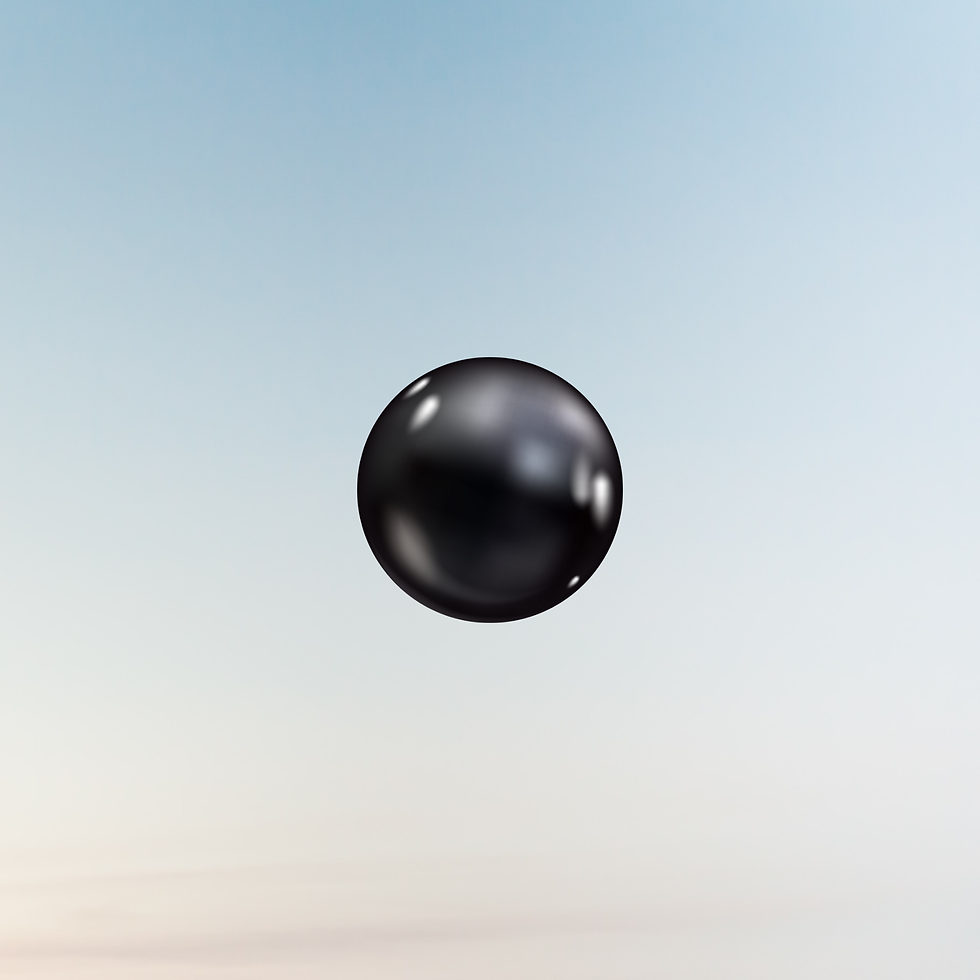
And this spherical ball of tar, through holes (or circular tares) created within the ball, being that of a black hole (for reference as to why all celestial bodies inevitably follow a spherical circular pattern within our Universe, go read the "The Universe: Perpetual Multi-Curvature Rotation" theory), creates a type of vacuum, or for a clearer example, a "whirlpool" within the tar ball which fills up with matter like filling a super small balloon-like pocket.

What you would find within a Black Hole would not be some super cool time travelling or Universal "travelling loom," but rather nothing short of the feeling of being inside someone's pocket. Only this pocket is super dark, and filled with remnants of matter.
Not to mention you would also be disintegrated into nothing but particles of matter before even entering said "pocket."
So there's that too.

And if you think maybe, just maybe, you can create something to travel into a Black Hole just to catch a glimpse of said "pocket," I would hypothesis that this isn't entirely possible (although I never say never 😉) as all that "is" within our Universe, is mathematically designed to be broken up before entertaining a black hole, especially the BEAO black hole, as is its design and purpose.

Your best chance would be a regular or smaller sized Black Hole, which MAY have a lower gravitational pull rate (thus a lower "break down" rate), offering some opportunity for an incredibly strong material-specific device to enter the hole (highly theoretical).
Although I wouldn't expect to get it back if it succeeds (yet, evolution dictates that surpassing previously recognized theoretical fact is a necessity, so by all means, please go ahead and prove that theory wrong), so study what you need while you can, and make sure to speed towards the center as the gravitational cylindrical pull is likely a high contributor to the break down of materials.

That being said, specific to the BEAO Black Hole, you likely could not actually find any material, substance, or construct any device that would be able to withstand BEAO due to the calculation of the constructs of the Universe deeming it impossible.
Once again, I'll explain.
The Universe is mathematically specific, right down to a multi-zero decimal digit, times infinity.

What I mean is, it is so specific that it could quite literally be classified, from a spiritual or religious sense, as fate.

It is an inevitability, not a possibility.
Everything that BEAO collects within the Universe within its gravitational pull, is precisely the exact amount of matter it expelled in the Big Bang, and the precise amount of matter required for the Big Bang to happen in the first place.

Meaning, it is designed to pull in every single form of matter within our Universe, with all black holes merging into a single unit within BEAO, to inevitably fill up and once again form the constructs of the Big Bang.

Then, upon the final piece of matter, right down to a single speck of dust,
it explodes once again.

Thus creating our Universe once again.
This is the "Equation of the Universe" (at least "Our Universe") and is the inevitability and structural consistency of this Universe.
Now, this does not mean that their is no workaround, because I assure you, as I understand, there is, but it comes at a time of quite literally, Universal Unity, and evolution far extending past the foundations of Pride.
In which we are currently not even close to being ready, as it also follows the Rule of 3 specific to Acceptance, Unity, and Evolution:

But once again,
that is for another time.

You see everything that happens within the Universe is, or may be (this is still debatable), up for grabs, but the foundational mathematical equation of how the Universe "Begins and Ends" on repeat, is not up for debate.
This is not like diverting an asteroid from Earth. This is quite literally the Birth, Death, and Rebirth of the entire Universe, in which all things only exist in relation to this consistency.
At least in this Universe.